
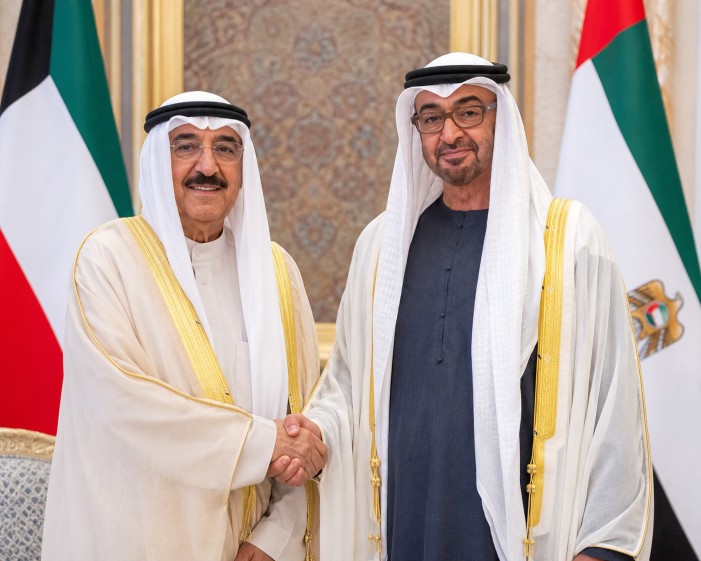
During a pivotal visit to Kuwait, Sheikh Mohamed bin Zayed Al Nahyan emphasized the need for enhanced peace and stability in the region, following recent missile and drone attacks from Iran. In discussions at Bayan Palace with Sheikh Meshal Al-Ahmad Al-Jaber Al-Sabah, both leaders underscored their dedication to bolstering regional security and fostering enduring peace, while also exploring avenues to broaden economic and developmental cooperation between their nations.
The timing of Sheikh Mohamed’s visit was significant, occurring just hours after Kuwait’s air defense systems successfully intercepted a barrage of ballistic missiles, a cruise missile, and several drones originating from Iran. The aftermath of these interceptions resulted in debris falling across multiple areas, injuring one individual and causing material damage, according to local officials. Kuwait’s government swiftly condemned these actions as a breach of sovereignty and a direct threat to regional security, declaring its right to undertake necessary measures for territorial defense in line with international law.
The United Arab Emirates’ Ministry of Foreign Affairs echoed this condemnation, denouncing the attacks on both Kuwait and Bahrain. The UAE reaffirmed its solidarity with the affected nations and expressed support for their efforts to maintain security and stability within the region. This stance highlights the broader regional implications of the attacks and the shared commitment among Gulf states to address security challenges collectively.
The talks between Sheikh Mohamed and Sheikh Meshal were not only a reaffirmation of mutual security commitments but also an opportunity to discuss the expansion of bilateral ties, particularly in the areas of economic and developmental partnerships. This dialogue reflects the ongoing efforts by Gulf leaders to promote collaboration and address shared concerns in a volatile geopolitical landscape.