
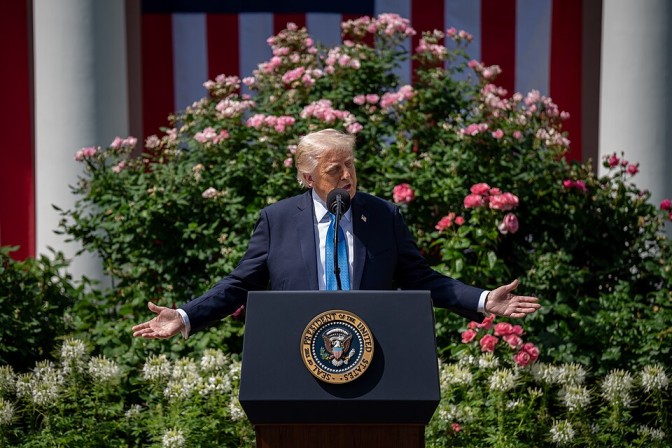
As negotiations between the United States and Iran progress, significant differences still impede a potential agreement aimed at easing tensions. President Donald Trump’s fluctuating stance—oscillating between threats of military action and hopes for diplomatic success—has contributed to market uncertainties. However, recent declarations hinting at the possibility of a peace agreement have tempered oil prices and reassured investors.
Discussions are reportedly centered around a preliminary memorandum of understanding to tackle immediate issues, such as the reopening of the Strait of Hormuz, a vital channel for global energy trade. More intricate subjects, like Iran’s nuclear ambitions, are expected to be addressed in subsequent negotiations. A major sticking point involves economic relief, with Iran demanding access to its frozen overseas assets before fulfilling substantial commitments. Meanwhile, the U.S. advocates for linking sanctions relief and economic benefits to tangible progress within any prospective deal.
Nuclear restrictions also remain a contentious issue. Washington is calling for more stringent commitments concerning uranium enrichment and nuclear oversight, while Tehran seeks to defer detailed discussions by opting for broader initial agreements. Despite these challenges, officials from both nations acknowledge advancements in talks and maintain that a diplomatic resolution is attainable.
Analysts suggest that both U.S. and Iranian governments are under increasing pressure to circumvent further military conflicts and establish a deal that could stabilize the volatile region. Central issues include regional security, energy exports, and economic recovery as both parties strive to construct a framework that might eventually lead to a more comprehensive agreement.