
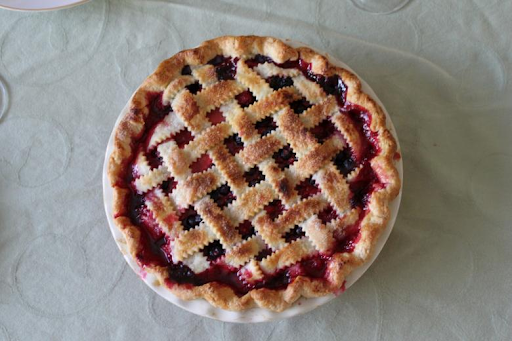
This crostata recipe specifies baking for 25-30 minutes at a particular temperature, and that precision is key to success. Understanding the role of heat in baking this tart—and why the right temperature is crucial—can help you achieve a perfectly golden, crisp, and well-baked dessert every time.
The initial blast of heat in a preheated oven is vital for the pastry. It causes the cold butter in the pasta frolla to melt and release steam rapidly. This steam creates small pockets in the dough, pushing apart the layers of flour and resulting in a light, crumbly, and flaky texture. If the oven is not hot enough, the butter will melt slowly and soak into the flour, resulting in a greasy, dense crust.
A consistent, moderate heat is then needed to cook the tart through. The temperature needs to be high enough to brown the crust and cook the pastry base fully, but not so high that the lattice top burns before the base has a chance to bake. A properly calibrated oven ensures even cooking, so the edges and the center are done at the same time.
The heat also plays a role in setting the jam. As the tart bakes, the heat causes excess water in the jam to evaporate, which concentrates its flavor and helps it to thicken further. This is why the lattice top is so effective—it allows the steam to escape freely.
For best results, always preheat your oven fully before the tart goes in. It’s also a good idea to use an oven thermometer to check that your oven’s thermostat is accurate. Mastering the element of heat is a fundamental step towards becoming a more confident and successful baker.